
There is only one preventive treatment for Cystoisospora suis, and it works well. What sits beyond it is a margin still available, and it is worth more than it appears.
In conversations with producers, Cystoisospora suis rarely comes up when the subject turns to what is holding back piglet performance in the first weeks of life. Clostridium, E. coli, rotavirus and ventilation come first, and for good reason, because those are the problems that announce themselves. This one does not. On a farm where nothing looks obviously wrong, with no diarrhea worth reporting and no mortality to speak of, weaning weights can still come in under target batch after batch with nothing obvious to blame.
Cystoisospora suis is the most important coccidian in pigs, and the pattern is the same in every major producing region. Around 70% of farms in Europe test positive, and up to 90% of herds in the United States, where coccidia are found in 10% to 36% of piglet diarrhea cases sent to diagnostic laboratories. In Asia, prevalence has risen over the last forty years and is now higher in intensive systems than in extensive ones. In Brazil, infection is strongly associated with farms reporting diarrhea, and detection increases with farrowing room temperature.
The Losses Behind a Healthy-Looking Litter
Cystoisospora suis rarely kills piglets, which is why it does not get the attention other diseases do. The cost is in performance. Infection can take up to 20% of body weight gain while it runs, and as much as a kilogram of weaning weight in the animals it hits hardest. A kilogram at weaning is worth roughly nine additional days to slaughter and about 12.5 kg of extra feed, so most of the cost is paid long after the parasite has gone.
Most cases never appear as clinical disease. On farms reporting no pre-weaning diarrhea problem, surveys still find 50% to 85% of litters positive. These are the animals that are never treated, and they represent most of the loss.
What Standard Prevention Leaves Behind
Toltrazuril works. Given correctly in the first days of life, it suppresses oocyst shedding and protects growth, and it remains the reference for preventive control. In most markets it is also the only preventive molecule licensed for the job, so its limitations become the limitations of the whole program. Three of them will be familiar to anyone working in a farrowing house.
- A narrow application window: The prepatent period is five days. By the time oocysts appear in feces, the gut lining is already damaged. The dose must go in during the first days of life, against a problem that has not shown itself yet.
- A single dose against continuous exposure: Sporulated oocysts stay infective for more than ten months, and ordinary disinfectants do not touch them. The reservoir is the pen rather than the sow, and the pen is still there next week.
- Emerging resistance: Antiparasitic resistance is now documented across livestock species, and C. suis is no exception. A field isolate tested in Austria under controlled conditions failed to respond to toltrazuril, even at 50% above the label dose.
In practice, most treated farms still test positive. The molecule is not the problem. One precisely timed dose is being asked to cover a parasite that is present continuously, in a pen that stays infective for months.
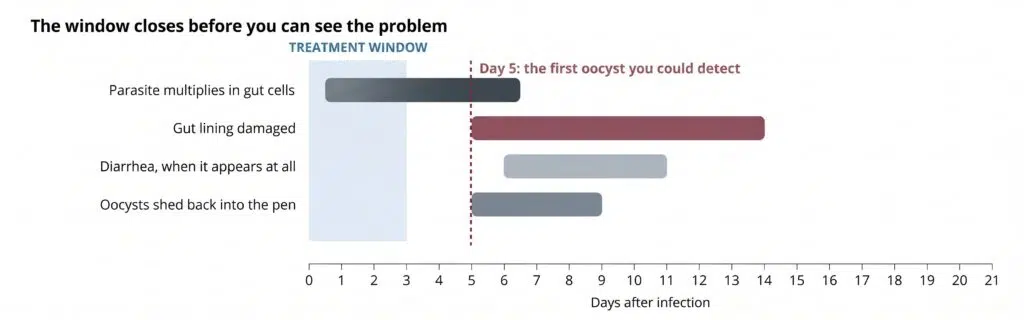
Figure 1. The treatment window closes before the parasite becomes detectable.
Where Quillaja Extract Comes In
Quillaja extract is obtained from the Quillaja saponaria tree and standardized in triterpenic saponins. Concentrated and standardized properly, these compounds are a powerful tool, and they are available in powder or liquid form so they can be supplemented through feed or water at any stage. They act on the parasite and on the piglet at the same time:
- A stronger and more balanced immune response: Saponins help the piglet respond faster to a challenge and keep that response proportionate. Excessive inflammation consumes energy that would otherwise go into growth.
- Direct pressure on the parasite: Saponins bind to the cholesterol-rich membrane of the protozoa and disrupt it, which limits the ability of the parasite to establish in the gut.
- A gut that keeps working: Better villus condition and faster repair of damaged tissue, which is what determines whether the piglet keeps absorbing nutrients while it is under challenge.
What Quillaja Extract Does Against Cystoisospora suis
A trial led by Plantae Labs in collaboration with AHPharma Inc., an independent research center in Maryland, United States, tested quillaja extract against a Cystoisospora suis challenge. Weaned piglets of 21 days of age were infected with 100,000 sporulated oocysts each on day 0 and followed for the next 21 days. All animals received the same corn and soybean meal prestarter, formulated at 1425 kcal/lb, with no coccidiostat and no antibiotic in any treatment. Quillaja extract was compared against an infected untreated control and a toltrazuril reference, in a randomized complete block design with eight replicates of four pigs per treatment. Oocyst counts were performed on days 7, 14 and 21.
Oocyst output in the untreated group stayed high throughout, at 4.41, 4.46 and 4.51 log oocysts per wet gram of feces on days 7, 14 and 21. Piglets receiving quillaja extract were significantly lower at every sampling point, reaching 2.48, 2.65 and 2.34 over the same period. On days 7 and 21 those values did not differ significantly from the toltrazuril reference, which recorded 2.37, 2.29 and 2.31. The separation appeared within the first week and held to the end of the trial. Lower shedding also means less oocyst load returning to the pen, where the next group picks up its infection.
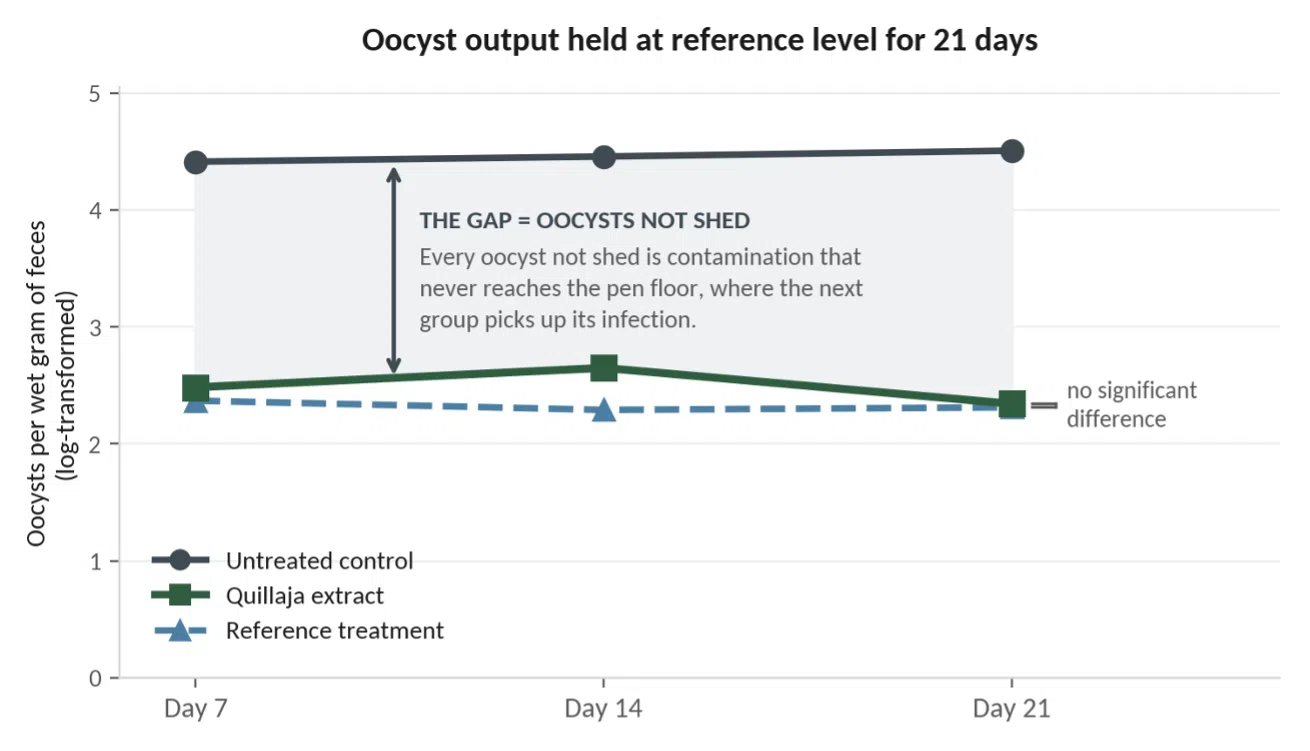
Figure 2. Oocyst output across the 21-day observation period. AHPharma Inc., Maryland, United States.
The Effect on Growth and Feed Efficiency
Average daily gain reached 0.350 kg per day with quillaja extract against 0.310 kg in untreated animals, an improvement of 12.9%. Corrected feed conversion improved by 3.3%, from 1.302 to 1.259, with no significant difference from the toltrazuril reference. Both parameters moved in the same direction as the parasitological results, which is what would be expected if the extract is protecting the gut surface the piglet depends on to absorb nutrients.
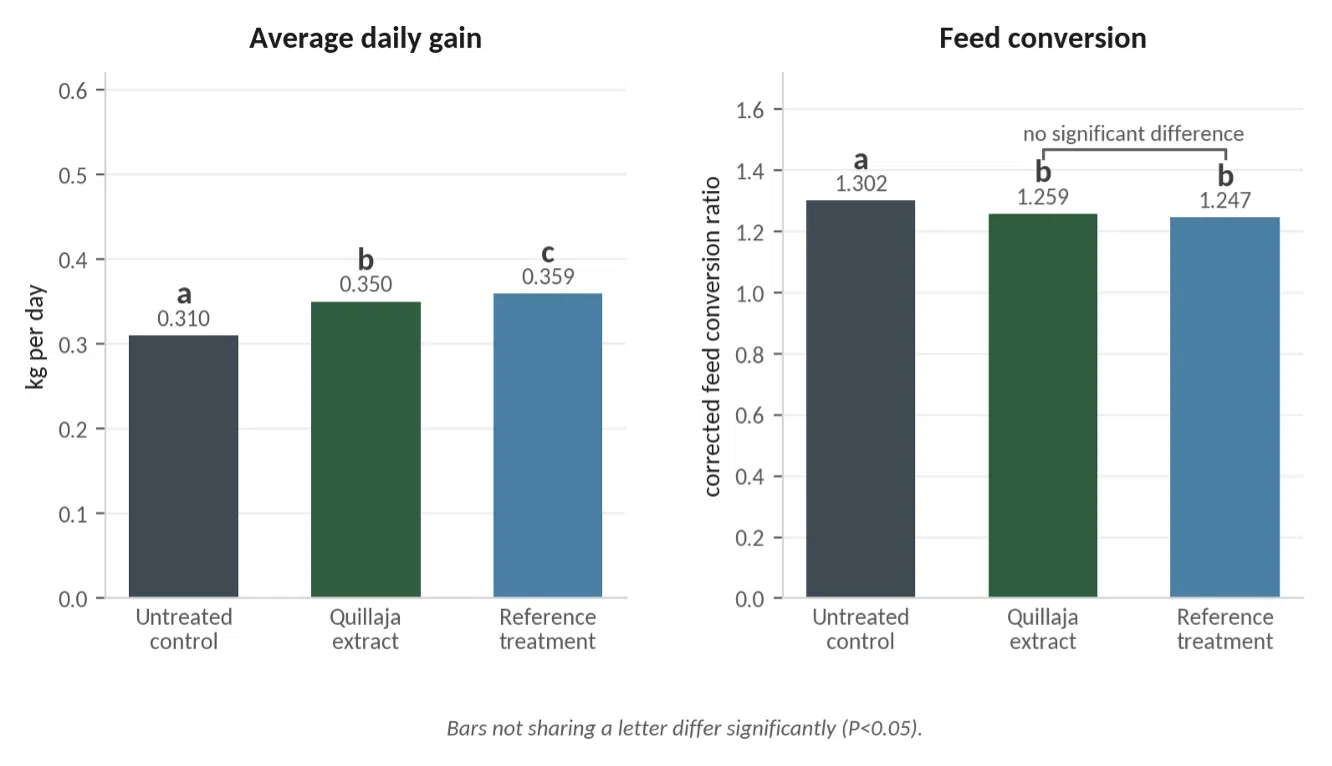
Figure 3. Average daily gain and corrected feed conversion over the 21-day period.
Quillaja Extract: A Complement That Works Across the Nursery
Preventive treatment does its job, and it has limits. Quillaja extract reaches the margin those limits leave behind, with results similar to the reference treatment.
Having both powder and liquid forms is what makes this practical on farm. Before weaning, when piglets are still eating very little solid feed, the liquid can be given through water or milk replacer. After weaning, the powder goes into prestarter and nursery diets. Infection pressure runs across both phases, and the same product can follow it without changing anything else.
The value is not limited to one parasite either. A stronger and more balanced immune response, direct pressure on pathogen membranes and better gut condition all apply to the other enteric challenges a piglet meets during the same weeks. Separate trials run by Plantae Labs on E. coli control in the nursery point in the same direction. That matters most in the nursery, where the immune system is still developing while the animal is also handling weaning, feed transition and mixed infection pressure. Support given during that window shapes how the pig performs well beyond it.
Used this way, quillaja extract can work as a first line or as a complement, running continuously through the nursery and reaching every animal on the diet. Healthier piglets, better welfare, better performance, and in every one of them a margin that would otherwise go missing.

References
- Feix AS, Joachim A. Cystoisospora suis. Trends in Parasitology. 2024;40(7):647-648.
- Hinney B, Cvjetković V, Espigares D, et al. Cystoisospora suis control in Europe is not always effective. Frontiers in Veterinary Science. 2020;7:113.
- Shrestha A, Freudenschuss B, Jansen R, Hinney B, Ruttkowski B, Joachim A. Experimentally confirmed toltrazuril resistance in a field isolate of Cystoisospora suis. Parasites & Vectors. 2017;10:317.
- Sperling D, Calveyra J, Karembe H, de Freitas Costa E. Cystoisospora suis infection in suckling piglets in Brazil: prevalence and associated factors. Veterinary Parasitology: Regional Studies and Reports. 2022;36:100796.
- Gong QL, Zhao WX, Wang YC, et al. Prevalence of coccidia in domestic pigs in China between 1980 and 2019: a systematic review and meta-analysis. Parasites & Vectors. 2021;14:248.
- Pettersson E, Hestad S, Möttus I, Skiöldebrand E, Wallgren P. Rotavirus and Cystoisospora suis in piglets during the suckling and early post weaning period, in systems with solid floors and age segregated rearing. Porcine Health Management. 2019;5:5. doi:10.1186/s40813-019-0114-0
- Nunes T, Skampardonis V, Costa F, da Conceição MA, Sperling D. Cystoisospora suis in Portugal: an observational study of prevalence, management, and risk factors. Porcine Health Management. 2023;9:34. doi:10.1186/s40813-023-00328-8
- Fleck JD, Betti AH, da Silva FP, Troian EA, Olivaro C, Ferreira F, Verza SG. Saponins from Quillaja saponaria and Quillaja brasiliensis: particular chemical characteristics and biological activities. Molecules. 2019;24(1):171.
- Plantae Labs. Evaluation of a standardized Quillaja saponaria extract in the control of Isospora suis in early-weaned piglets. AHPharma Inc., Maryland, United States.
